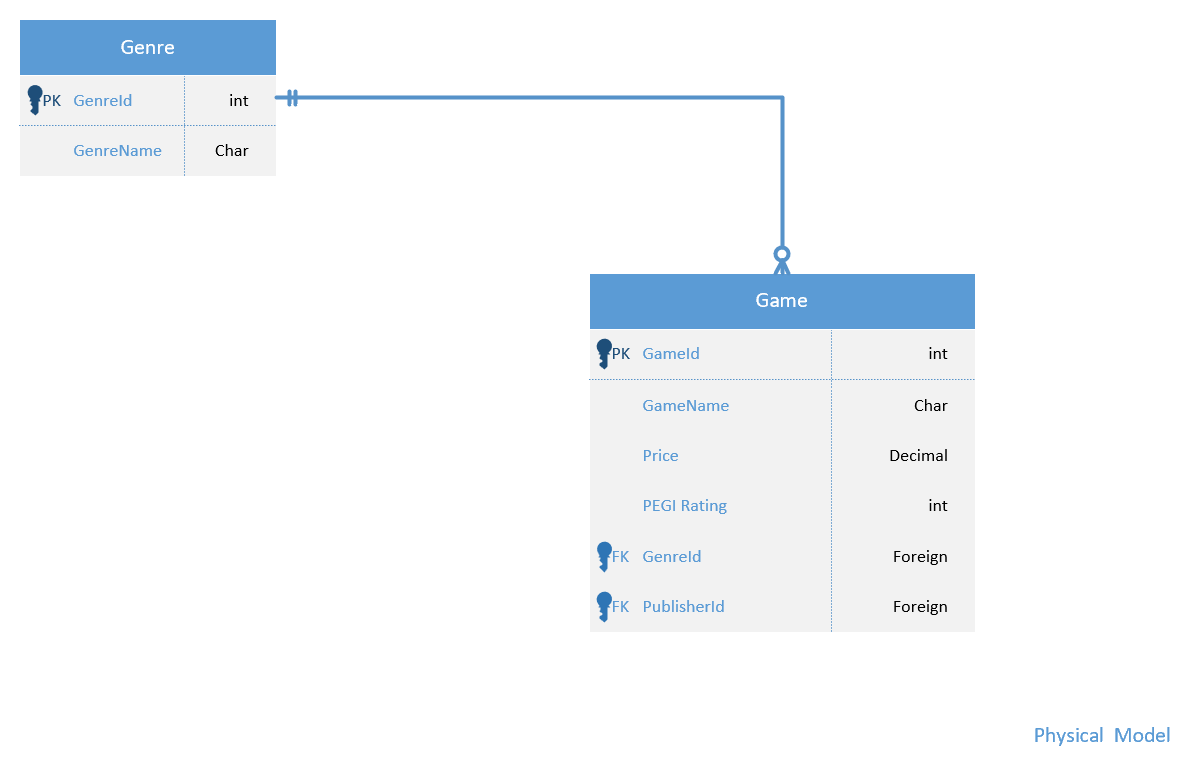
Physical Model




The Physical Data Model is the most concrete and technology-specific model. It translates the logical model into a schema that can be implemented in a particular database management system (DBMS), considering performance, storage, and access strategies.
Value:
- Database Implementation Blueprint: It provides the exact specifications for creating the database, including tables, columns, data types, indexes, and constraints.
- Performance Optimization: It allows for the optimization of database performance by considering physical storage, indexing strategies, and normalization/denormalization trade-offs.
- Technology-Specific Considerations: It accounts for the specific features and limitations of the chosen DBMS.
- Direct Database Generation: Many database tools can generate the DDL (Data Definition Language) scripts directly from the physical model, accelerating database creation.
Example: For "Customer" in a relational database, the physical model would specify the Customers table, with columns like customer_id (PRIMARY KEY, INT), first_name (VARCHAR(50)), last_name (VARCHAR(50)), email (VARCHAR(100) UNIQUE), and address (VARCHAR(255)). It would also define indexes for frequently queried columns.
GRAPHIC